



Blog
Healthy vs Processed Snacks – What Should You Choose?

In today’s fast-moving lifestyle, snacking is no longer optional, but it has become a necessity. Whether it’s a quick bite between meetings or an evening craving, snacks help keep hunger at bay and energy levels stable. Today, the supermarket shelves are filled with tempting packaged foods, and the real challenge lies in selecting the right type of snack.
There are so many health snacks and processed snacks available in the market, and the confusion is which one is better for health. The most common reason is that both satisfy hunger instantly, but their long-term impact on health is different.
Understanding the difference between these two categories can help you make smarter choices that support your overall well-being, weight management, and long-term health.
What Are Healthy Snacks?
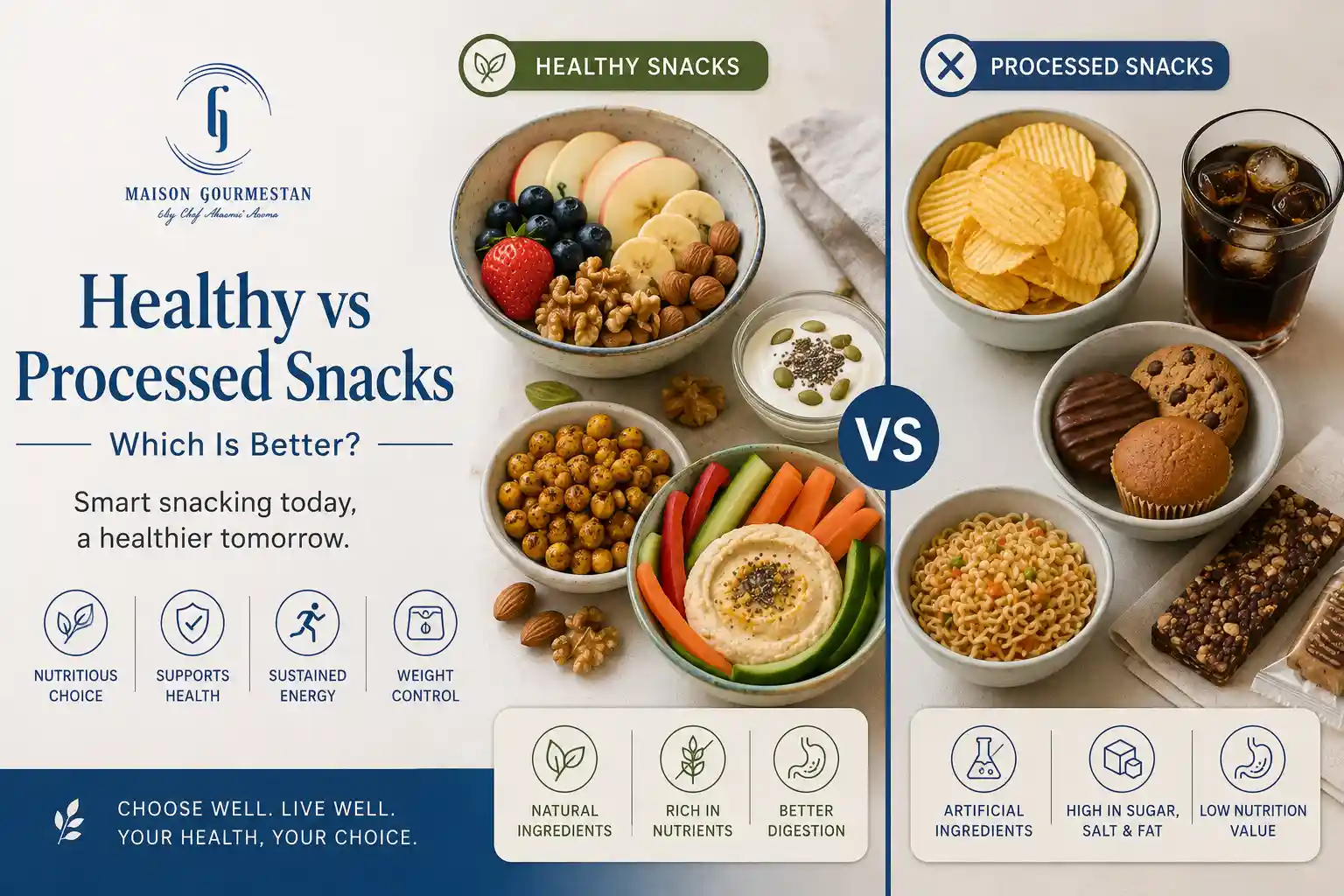
Healthy snacks are foods that are minimally processed and provide nutrition to your body. They provide essential vitamins, minerals, fiber, and healthy fats that your body needs to function effectively and efficiently. Unlike empty-calorie foods, healthy snacks nourish your body while keeping you full and satisfied.
Examples of Healthy Snacks
- Fresh fruits like Apples, Bananas, Oranges, and Berries
- Nuts and Seeds such as Almonds, Walnuts, and Chia seeds
- Roasted Chana or Makhana
- Yogurt or Buttermilk
- Boiled Eggs or Sprouts
- Homemade Smoothies, Salads, and Soups
Benefits of Healthy Snacks:
Healthy snacks give various benefits, instead of just satisfying hunger. They provide sustained energy, helping you to stay active and focused throughout the day. They assist in controlling appetite and reducing unnecessary craving, because they are rich in fiber and protein.
In addition, healthy snacks support better digestion, improve metabolism, and contribute to weight management. They also play an important role in maintaining hormonal balance and keeping your skin and hair healthy.
What Are Processed Snacks?
Processed snacks are foods that have been altered from their natural state, often through refining, preserving, or adding artificial ingredients. These snacks are designed for convenience and taste but often come at the cost of nutrition.
Common Processed Snacks:
- Chips, Namkeen, and Fried Snacks
- Biscuits, Cakes, and Pastries
- Instant Noodles and Packaged, ready-to-eat meals
- Sugary Cereals and Granola Bars
- Soft Drinks and Packaged Fruit Juices
Why Processed Snacks Can Be Harmful?
Processed snacks are mostly high in added sugars, unhealthy fats, and sodium, while being low in essential nutrients. They provide instant energy but often lead to sudden energy crashes, making you feel tired and hungry again soon.
Regular consumption of processed snacks is linked to weight gain, increased cravings, poor digestion, and lifestyle diseases such as diabetes and heart issues. Many of these foods also contain preservatives and artificial additives that may negatively affect long-term health.
Healthy vs Processed Snacks: Key Differences
Understanding the core differences can make your choices easier
Factor | Healthy Snacks | Processed Snacks |
Nutritional Value | High in nutrients | Low, often empty calories |
Ingredients | Natural and simple | Artificial and complex |
Satiety | Keeps you full for longer | Short-term satisfaction |
Health Impact | Supports overall health | Can harm long-term health |
Additives | Minimal or none | High in preservatives |
How to Make Healthier Snack Choices
Switching to healthier snacks doesn’t mean eliminating processed foods. It’s about making better and more mindful choices.
Practical Tips for Smart Snacking:
- Read food labels carefully: Avoid products high in sugar, sodium, and trans fats
- Choose whole foods: Fresh and natural foods are always a better option
- Plan your snacks: Keeping healthy options handy prevents impulsive eating
- Watch portion sizes: Even healthy snacks should be consumed in moderation
- Balance nutrients: Combine protein, fiber, and healthy fats for better satiety
For example, pairing a fruit with nuts or yogurt creates a balanced snack that keeps you full longer.
Are All Processed Snacks Bad?
Many processed foods are not harmful, because they undergo minimal processing but still retain their nutritional value. For instance, plain yogurt, roasted nuts, or whole-grain crackers can be part of a balanced diet if they contain limited additives.
The real concern lies with ultra-processed foods, which are heavily refined and loaded with artificial ingredients, sugars, and unhealthy fats. These should be consumed only occasionally.
Healthy Snack Ideas for Busy Lifestyles
If you have a busy and hectic schedule, you can still opt for healthy choices with a little planning. Here are some easy and nutritious snack ideas
- A handful of almonds and walnuts
- Fresh fruit with peanut butter
- Roasted makhana with light spices
- Greek yogurt topped with seeds
- Vegetable sticks with hummus
- Boiled corn with lemon and salt
- Sprout salad with chopped veggies
These healthy options are quick to prepare, portable, and much more beneficial than packaged alternatives.
Why Your Snack Choices Matter
Snacks that we eat daily have a direct impact on our overall health and well-being. Going for healthy snack options is the most viable solution to keep yourself fit and healthy.
- Maintain consistent energy levels.
- Support weight loss or weight management
- Improve digestion and gut health
- Reduce cravings for unhealthy foods
- Enhance focus and productivity
On the other hand, frequent consumption of processed snacks can lead to fatigue, overeating, and long-term health complications.
Final Thoughts
Selecting between healthy and processed snacks should not be a complicated decision. Healthy snacks provide the nutrients your body requires, while processed snacks often offer only temporary cravings.
The goal is not to eliminate processed foods but to prioritize healthier options in your daily routine. Even small changes, like swapping chips for nuts or sugary drinks for buttermilk, can make a significant difference over a period of time.
By making mindful snacking choices, you can improve your energy, support your health goals, and create a more balanced lifestyle.