





Blog
Best Millets for Everyday Eating

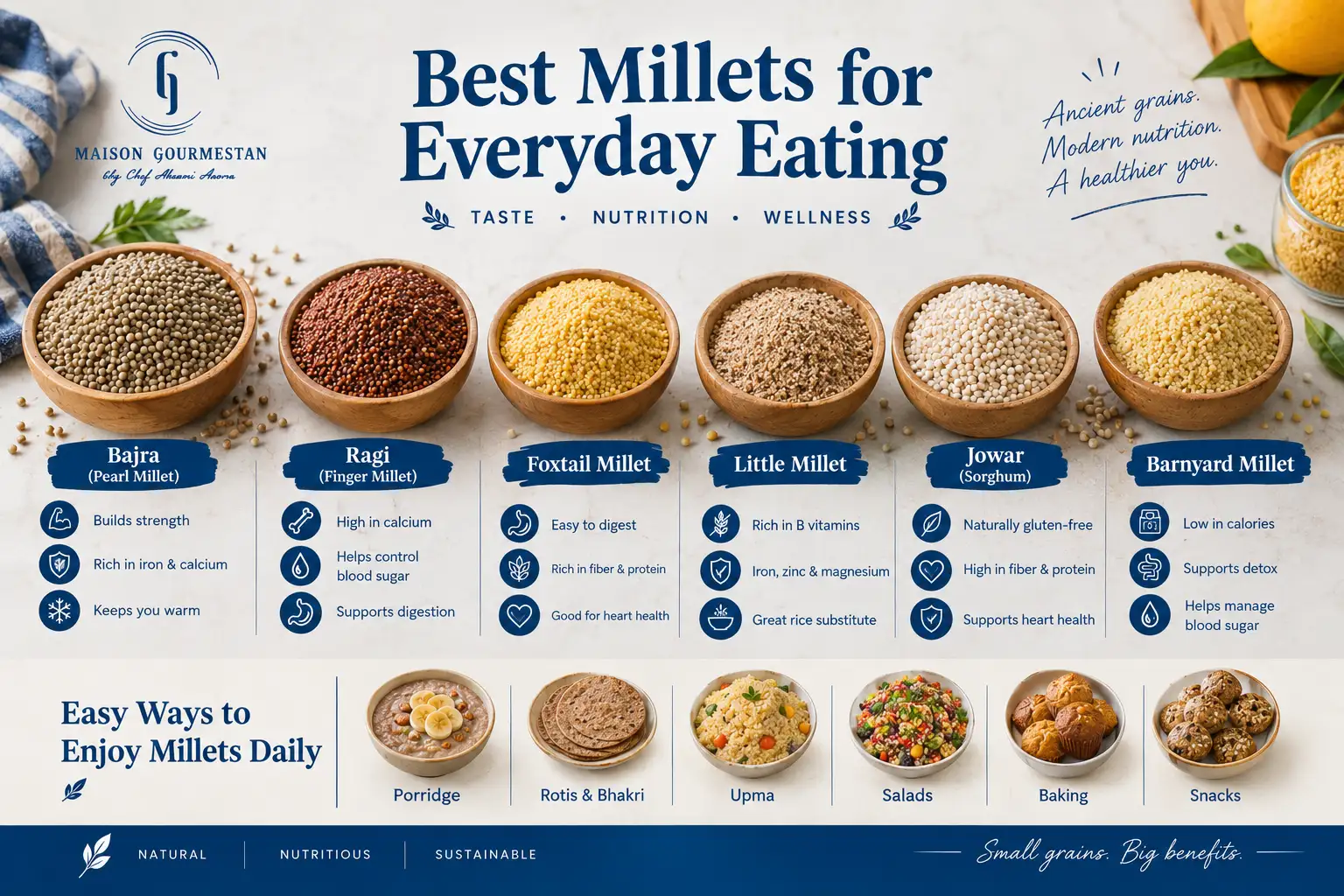
With the growing concerns regarding a healthy lifestyle, millets have taken a front seat in modern diets because they are healthy and good for health. These traditional and ancient grains are gluten-free, nutritious, climate-resilient, and very easy to digest. For centuries, millets have been a part of traditional meals in India, even long before refined grains became popular. Now, in Dubai, people have become more conscious about health and have started moving to millets
Millets have become a popular dietary choice and have been recognised as supergrains with the growing awareness of diabetes, weight management, and gut health. But with so wide a variety and options available in the market today, the dilemma is which millets are best for everyday eating?
In this article, let’s explore the various millets available in the market, their benefits, and which one you should opt for in everyday eating.
Why Millets Are a Smart and Healthy Choice
It is very important to understand why millets have become a smart and healthy choice before exploring their different varieties.
- Millets are naturally gluten-free
- Millets are High in fiber and protein
- Millets are Low glycemic index (good for blood sugar control)
- Millets are rich in iron, calcium, magnesium, and antioxidants
- Millets help to improve digestion and gut health
- Millets help to support weight management and heart health
Millets provide consistent energy without sudden sugar hikes, making them the best option for a modern lifestyle.
1. Bajra (Pearl Millet) – Ideal for Building Strength and Staying Warm in Winter
Pearl millet, also known as Bajra,is one of the traditional grains consumed by Indians for many years. It grows in dry areas and does not require much water to grow. From Bajra, various food recipes can be made like rotala, uttampams, porridge, and so on. Mostly people like to include these millets in winters for better health and strength.
Benefits of Pearl Millet
- Loaded with Proteins and Iron
- Best Source of calcium for bone strength
- Ideal in Winters to keep your body warm.
- Supports stamina and energy levels
How to consume it on a daily basis:
- Bajra Roti with ghee and ghud
- Bajra khichdi with lots of vegetables
- Bajra porridge for breakfast
This millet is Best for people with anemia, low energy, or high physical activity
2. Finger Millet (Ragi) – A Rich Source of Calcium for all age groups
Finger millet, also known as Ragi, is rich in calcium and iron. This millet is the best option for growing children as it helps to make bones and teeth strong. Ragi also supports overall health in adults. This millet helps in overall weight management, by keeping full for a longer period of time.
Benefits of Ragi
- Ragi is extremely rich in calcium (Best for bones and teeth)
- Ragi is a good source of amino acids
- Ragi helps control blood sugar levels
- Ragi aids weight management
How to consume it on a daily basis:
- Ragi porridge for breakfast
- Ragi dosa or idli
- Ragi malt drink
- Ragi cookies or laddoos (healthy desserts)
Ragi is best millet for children, women, elderly people, and those who have calcium deficiency.
3. Foxtail Millet – Light and Easy for Digestion
Foxtail millet is a very ancient grain (millet) that is consumed as a healthy alternative to rice and wheat. Foxtail millet is one of the simplest and easiest millets to digest, making it ideal for daily meals.
Benefits of Foxtail Millet
It is considered a nutri-cereal because it is:
- High in dietary fiber
- Rich in protein
- Good source of iron, magnesium, and calcium
- Low in glycemic index (helps to manage blood sugar)
How to use it in daily meal
- Foxtail millet upma with vegetables
- Millet pulao with vegetables
- Replacing rice and using this millet in daily meals
- Foxtail millet salad bowls
Foxtail Millet is perfect option for diabetics, weight-watchers, and people with digestive issues
4. Little Millet – Perfect Rice Substitute
Little millet is one of the traditional nutri-cereals found mainly in India and parts of Asia. The grains are very tiny, round, and usually light brown or yellowish. It is one of the easiest millets to use as a rice replacement.
Nutritional value of Little Millet
It is considered very healthy because it is
- Rich in dietary fiber
- Good source of B vitamins
- Contains iron, zinc, and magnesium
- It is Gluten-free
- Easy to digest
How to use it in daily meals :
Little millet is commonly used as a rice substitute and in
- Khichdi, Pulao Upma, Porridge or Idli/dosa blends
- Millet curd rice
- Vegetable biryani using little millet
- Millet pongal
Best for: People switching from white rice to other healthier options
5. Sorghum (Jowar) – Great for Gluten-Free Diets
Sorghum, or Jowar, is one of the most popular millets for gluten-free eating. It is one of the oldest cultivated grains used in many homes since ancient times.
Why it is popular
Sorghum is the most popular gluten-free super grain because it is
- Naturally gluten-free
- High in fiber and plant protein
- Rich in antioxidants
- A good source of iron, magnesium, and B vitamins
How to eat it daily:
- Jowar roti
- Jowar bhakri with vegetables
- Jowar porridge
- Millet-based wraps and tacos
- Upma and dosa mixes
Best for: Gluten-sensitive individuals and heart health support
6. Barnyard Millet – Ideal for Fasting and Detox Diets
Barnyard millet is a light and gluten-free millet which is mostly used during fasting and weight-loss diets because it is easy to digest and keeps you full
Benefits of Barnyard Millet
- Low in calories
- High in dietary fiber
- Supports natural detox and cleansing
- Helps in managing blood sugar levels
How to consume it daily
- Barnyard millet khichdi
- Upma or porridge
- Kuttu-style fasting meals alternative
- Vegetable millet bowls
Best for: Weight loss diets, fasting diets and detox plans
How to Include Millets in Daily Diet
You don’t need to make drastic changes to start eating millets. Small swaps are enough:
- Replace rice/wheat with millets in one meal daily (foxtail, little, barnyard, jowar, bajra)
- Swap grains in daily food recipes like khichdi, upma, pulao, dosa, and idli
- Add millet porridge or millet upma to your breakfast options
- Use millets in light meals like salads, rotis, or snacks
- Mix millet flour with wheat flour for chapati or baking
- Start small (2–3 times a week) and increase gradually to daily use
Benefits of Eating Millets Daily
Millets, when consumed on a regular basis, they offer long-term health benefits
- Better digestion and gut health
- Stable blood sugar levels
- Improved heart health
- Stronger bones and immunity
- Sustainable weight management
- Reduced risk of lifestyle diseases
Final Thoughts
Millets, today have become a health trend across the world for balanced and healthy eating. Each millet has its own unique nutritional value, and when we include them in our daily diet they can significantly improve the overall well being.
For an everyday diet, the best approach is to rotate millets like Pearl Millet (Bajra), Finger Millet (Ragi), and Foxtail Millet along with others based on your health needs and taste preferences.
Simple, natural, and nutrient-rich millets truly deserve a permanent place on your plate for better health.